LOGISTICS INVESTMENT CONDITIONS IN VIETNAM FOR FOREIGN INVESTORS
Vietnam’s logistics sector is experiencing rapid growth and is emerging as a key supporting industry for economic development. With its strategic geographical location, stable economic growth, and the boom in e-commerce, Vietnam offers significant opportunities for international businesses in this field. As a result, the sector continues to attract strong interest from foreign investors seeking logistics investment opportunities in Vietnam. However, logistics is classified as a conditional business sector, and foreign investment in this area must comply with specific legal restrictions and licensing requirements under Vietnamese law.
This article aims to provide a comprehensive legal overview of the conditions applicable to foreign investors engaging in logistics investment in Vietnam, in line with the Investment Law, Vietnam’s commitments under the World Trade Organization, and relevant specialized regulations.
1. Overview of Logistics Investment in Vietnam
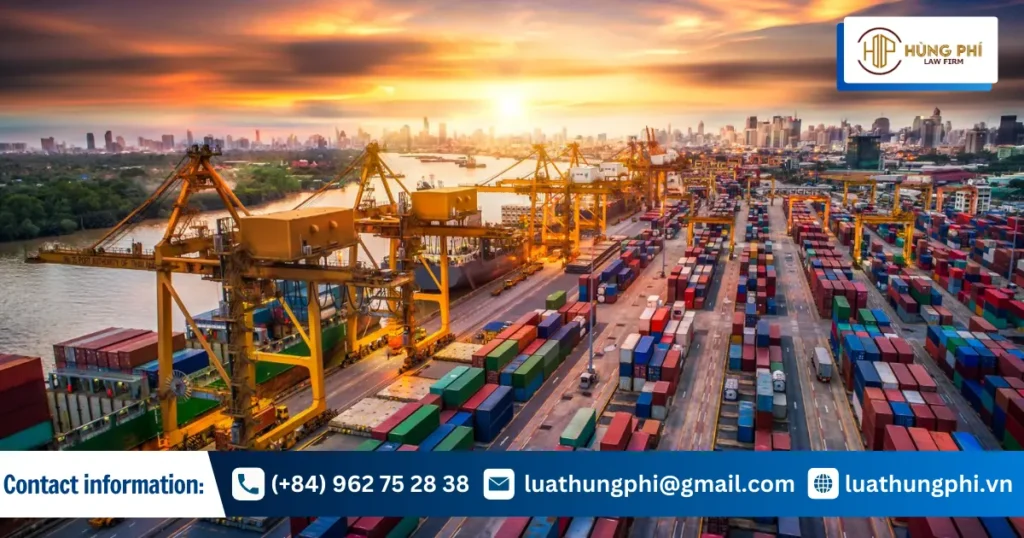
General Overview of the Logistics Industry in Vietnam
In recent years, the logistics industry in Vietnam has achieved strong and stable growth, with services achieving stable annual growth of 14–16%, contributing approximately 4.5–5% of GDP. Vietnam ranks 43rd out of 139 countries in the Logistics Performance Index (LPI) and is among the top five countries in ASEAN. Logistics infrastructure has been significantly developed, with an expanding system of seaports, airports, expressways, and logistics centers located in key economic regions. Nationwide, there are more than 34,000 logistics enterprises, many of which have integrated into global supply chains and adopted advanced technologies.
The logistics sector in Vietnam plays a crucial role in supporting domestic production, international trade, and supply chain operations. It covers a wide range of activities, including transportation, warehousing, freight forwarding, customs brokerage, and other auxiliary services.
From a legal perspective, logistics services are regulated by multiple instruments, most notably:
- The Law on Investment;
- The Law on Commerce;
- Vietnam’s WTO Schedule of Commitments on Services; and
- Sector-specific regulations governing transportation and related services.
Foreign investors may access the Vietnamese logistics market, provided that they comply with market access conditions, foreign ownership limitations, and business licensing requirements applicable to each specific logistics service.
>> SEE ALSO: VIETNAM’S LEGAL FRAMEWORK ON INVESTMENT INCENTIVES
2. Permitted Logistics Services for Foreign Investors in Vietnam
Pursuant to Vietnam’s commitments upon accession to the World Trade Organization, together with the Law on Investment and relevant specialized regulations governing the logistics sector, foreign investors are allowed to participate in logistics business activities in Vietnam. However, market access is not uniform across all logistics services and is assessed on a service-by-service basis.
In practice, foreign investors may engage in most logistics services in Vietnam. Based on common industry classification, these services generally include:
- Transport support and cargo handling services;
- Warehousing and cargo management services;
- Logistics agency and customs clearance services;
- Freight transport services;
- Commercial logistics and distribution services; and
- Technical analysis and inspection services.
Nevertheless, it is important to emphasize that not all logistics services are fully open to foreign participation. The scope of permitted activities, ownership ratios, and applicable licensing conditions vary depending on the specific type of service and Vietnam’s relevant international commitments.
>> SEE ALSO: TAX INCENTIVES AVAILABLE TO FOREIGN INVESTORS IN VIETNAM
3. Foreign Ownership Caps and Investment Forms in the Logistics Sector
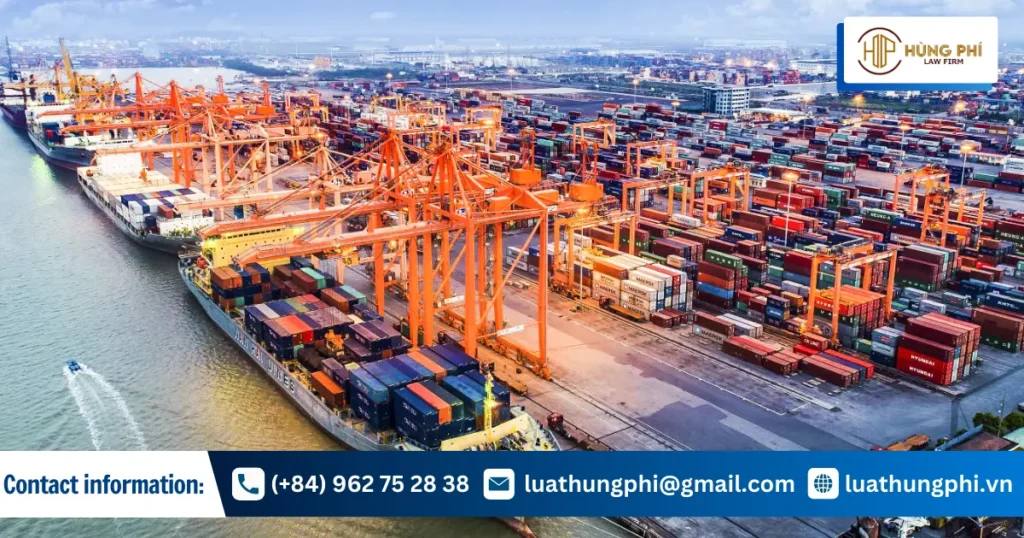
Foreign Equity Limits and Investment Structures in the Logistics Sector
3.1. Foreign Ownership Limitations Applicable to Logistics Services
Pursuant to Clause 3 Article 4 of Decree No. 163/2017/ND-CP, foreign investors conducting logistics services in Vietnam are only permitted to hold equity ownership within certain limits, depending on each specific type of logistics service. A uniform foreign ownership ratio does not apply to the logistics sector as a whole.
Specifically:
(1) Cargo transportation services are subject to the most stringent restrictions:
Maritime transport services (excluding domestic shipping), inland waterway transport, and railway transport: foreign ownership is capped at 49%;
Road transport services: foreign ownership is capped at 51%, and 100% of drivers must be Vietnamese citizens;
Air transport services: subject to applicable specialized aviation regulations.
(2) Container handling services:
Foreign investors may contribute capital, provided that foreign ownership does not exceed 50%.
(3) Agency services, customs clearance, and intermediary logistics services:
Capital contribution by Vietnamese investors is mandatory, and foreign investors are not permitted to hold 100% ownership.
(4) Technical analysis and inspection services:
These services are subject to a market-opening roadmap, under which foreign ownership restrictions may be lifted after a specified period; however, limitations on the scope and fields of operation may continue to apply.
3.2. Permissible Investment Forms in the Logistics Sector
Foreign investors may invest in the logistics sector in Vietnam through various legally recognized forms, including:
- Establishment of a wholly foreign-owned enterprise (where permitted);
- Establishment of a joint venture with Vietnamese partners;
- Capital contribution or acquisition of shares in an existing Vietnamese company;
- Investment under a Business Cooperation Contract (BCC), depending on the project structure.
Each investment form has distinct legal implications in terms of control, compliance obligations, and licensing procedures.
>> SEE ALSO: EXPERT LAWYERS FOR BCC ADVISORY AND DRAFTING IN VIETNAM
4. Key Legal Considerations for Foreign Investors Conducting Logistics Business in Vietnam
a. Comprehensive Legal and Regulatory Assessment
Foreign investors planning logistics investment in Vietnam should conduct a thorough legal and regulatory assessment at both the investment and operational stages. As logistics is classified as a conditional business sector, failure to comply with applicable regulations may result in licensing delays, administrative penalties, or operational disruptions. A clear understanding of market access conditions, regulatory procedures, and industry-specific requirements is therefore essential to ensure a smooth and compliant market entry.
b. Proper Classification of Logistics Services
One of the most critical issues is the correct classification of logistics services. Each logistics activity is subject to different market access conditions, foreign ownership limitations, and licensing requirements under Vietnam’s commitments to the World Trade Organization and domestic regulations. Misclassification may lead to inappropriate investment structuring, delays in licensing, or compliance risks during operations. Accordingly, investors should conduct a legal feasibility assessment and clearly define the scope of services before submitting any investment application. Proper classification is essential to ensure that logistics investment projects comply with market access commitments.
c. Compliance with Foreign Ownership Limits and Investment Structure
Foreign ownership caps vary depending on the specific logistics service, and in certain cases, cooperation with Vietnamese partners is mandatory. Investors should carefully design their corporate and investment structure, capital contribution arrangements, and shareholders’ agreements to ensure compliance with regulatory requirements. Proper planning is also essential to address long-term business control, profit distribution, and exit strategies, particularly in joint venture or M&A transactions.
d. Licensing Procedures and Regulatory Coordination
Investment in logistics often requires multiple approvals from different authorities, including investment, enterprise registration, and sector-specific licensing bodies. Common challenges include lengthy timelines, additional documentation requests, and inconsistent interpretations of legal provisions among regulators. Early engagement with competent authorities and careful preparation of application dossiers can significantly improve licensing efficiency and reduce regulatory risks. Licensing procedures play a decisive role in the success of logistics investment projects in Vietnam.
e. Ongoing Operational Compliance and Post-Licensing Obligations
After obtaining the necessary approvals, foreign-invested logistics companies must comply with ongoing regulatory obligations. These include maintaining statutory operational conditions, complying with labor and employment laws, fulfilling tax and accounting requirements, and meeting reporting and inspection obligations. Non-compliance may result in administrative sanctions, suspension of operations, or reputational damage.
f. Monitoring Regulatory Changes and Managing Legal Risks
Vietnam’s legal framework governing logistics and foreign investment continues to evolve, particularly in light of new trade agreements and regulatory reforms. Changes in market access commitments, transport regulations, or compliance requirements may affect foreign investors’ operations and expansion plans. Regular legal reviews, proactive risk management, and engagement with experienced local advisors are recommended to ensure long-term compliance and sustainable business operations in Vietnam’s logistics sector.
Logistics investment in Vietnam offers significant opportunities for foreign investors; however, it is subject to a complex regulatory framework. Understanding investment conditions, ownership limitations, and licensing requirements is essential for a successful and compliant market entry. With proper legal planning and professional advisory support, foreign investors can effectively navigate the Vietnamese logistics investment landscape.
>> SEE ALSO: MARKET ACCESS CONDITIONS FOR FOREIGN INVESTORS IN VIETNAM
5. Legal Advisory Services for Foreign Investors in the Logistics Sector in Vietnam
Comprehensive Legal Support for Foreign-Invested Logistics Projects
Our law firm provides comprehensive legal advisory services for foreign logistics investment in Vietnam. With in-depth knowledge of Vietnam’s investment and logistics regulatory framework, we support foreign investors throughout the entire investment and operation process, ensuring compliance and minimizing legal risks.
Our core legal services include:
Market access and foreign ownership advisory, including assessment of applicable market access conditions, foreign ownership caps, and regulatory restrictions for specific logistics services;
Investment structuring and licensing for logistics projects, covering the establishment of foreign-invested enterprises, joint ventures, and assistance with Investment Registration Certificate (IRC), Enterprise Registration Certificate (ERC), and sector-specific licenses;
Capital contribution and M&A support in the logistics sector, including legal due diligence, share acquisition, capital transfer, and transaction structuring in compliance with Vietnamese law;
Ongoing compliance and legal risk management, including advisory on operational compliance, regulatory reporting, contract management, and prevention of legal disputes during logistics operations.
Through practical and tailored legal solutions, we assist foreign investors in achieving efficient, compliant, and sustainable logistics investment operations in Vietnam.
6. Frequently Asked Questions (FAQs)
6.1. Can foreign investors establish a 100% foreign-owned logistics company in Vietnam?
Yes, foreign investors may establish a wholly foreign-owned logistics company in Vietnam for certain logistics services, provided that such services are fully open to foreign investment under Vietnam’s WTO commitments and domestic regulations. For other logistics services, foreign ownership may be subject to statutory caps or joint venture requirements.
6.2. What licenses are required for foreign-invested logistics companies in Vietnam?
In general, foreign-invested logistics enterprises are required to obtain:
An Investment Registration Certificate (IRC) (if applicable);
Relevant sub-licenses or business permits for specific logistics services, such as transportation or warehousing activities.
The exact licensing requirements depend on the scope of the logistics services provided.
6.3. Can foreign-invested logistics companies in Vietnam hire foreign employees?
Yes. However, under Clause 1 Article 152 of the Vietnam Labor Code, enterprises, agencies, organizations, individuals, and contractors may only recruit foreign employees for positions such as managers, executives, experts, and technical workers that Vietnamese employees are not yet able to meet in accordance with business and production needs.
6.4. Does Hung Phi Law Firm offer online consultation services?
Yes. We provide online legal advice via phone, email, Zalo, or WhatsApp,…. Our experienced lawyers offer flexible scheduling to ensure the most effective results and service quality for every client.
>> SEE ALSO: VIETNAM’S RELIABLE LAW FIRM FOR FOREIGN BUSINESSES
The above information outlines Conditions for foreign investors investing in the logistics sector in Vietnam, as provided by Hung Phi Law Firm to our clients.
Should you have any questions regarding this matter or require legal advice tailored to your specific case, please do not hesitate to contact the lawyers of Hung Phi Law Firm for timely support and professional consultation.
Contact Information:
Hung Phi Law Firm
Phone: (+84) 962 75 28 38
Email: luathungphi@gmail.com
Website: hungphi.vn
Sincerely,


HUNG PHI LAW - Comprehensive legal advice


Latest news
NAVIGATING FOREIGN INVESTMENT IN VIETNAM’S FINTECH AND PAYMENT INTERMEDIARIES
Mục lục1. Overview of Logistics Investment in Vietnam2. Permitted Logistics Services for Foreign Investors in Vietnam3. Foreign Ownership Caps and Investment Forms in the Logistics Sector3.1. Foreign Ownership Limitations Applicable to Logistics Services3.2. Permissible Investment Forms in the Logistics Sector4. Key Legal Considerations for Foreign Investors Conducting Logistics Business in Vietnam5. Legal Advisory Services for...
Read more
INVESTMENT CONDITIONS FOR FOREIGN INVESTORS ENTERING THE VIETNAMESE E-COMMERCE MARKET
Mục lục1. Overview of Logistics Investment in Vietnam2. Permitted Logistics Services for Foreign Investors in Vietnam3. Foreign Ownership Caps and Investment Forms in the Logistics Sector3.1. Foreign Ownership Limitations Applicable to Logistics Services3.2. Permissible Investment Forms in the Logistics Sector4. Key Legal Considerations for Foreign Investors Conducting Logistics Business in Vietnam5. Legal Advisory Services for...
Read more
LOGISTICS INVESTMENT CONDITIONS IN VIETNAM FOR FOREIGN INVESTORS
Mục lục1. Overview of Logistics Investment in Vietnam2. Permitted Logistics Services for Foreign Investors in Vietnam3. Foreign Ownership Caps and Investment Forms in the Logistics Sector3.1. Foreign Ownership Limitations Applicable to Logistics Services3.2. Permissible Investment Forms in the Logistics Sector4. Key Legal Considerations for Foreign Investors Conducting Logistics Business in Vietnam5. Legal Advisory Services for...
Read more
HOW TO SET UP FOREIGN-INVESTED MEDICAL FACILITIES IN VIETNAM
Mục lục1. Overview of Logistics Investment in Vietnam2. Permitted Logistics Services for Foreign Investors in Vietnam3. Foreign Ownership Caps and Investment Forms in the Logistics Sector3.1. Foreign Ownership Limitations Applicable to Logistics Services3.2. Permissible Investment Forms in the Logistics Sector4. Key Legal Considerations for Foreign Investors Conducting Logistics Business in Vietnam5. Legal Advisory Services for...
Read moreMost viewd news




Video of land law advice